
News: Design and business, art and technology, ideas and good stuff
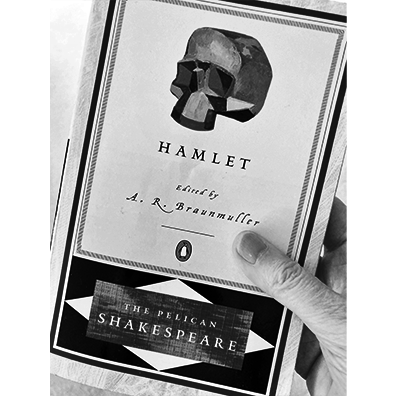
William Shakespeare | Hamlet | A play | Books to read
2026
Hamlet centres on the usurpation of legitimate inheritance. After King Hamlet is murdered, his brother Claudius seizes both the throne and the queen, displacing Prince Hamlet’s rightful succession. The play explores the political, moral, and personal consequences of stolen authority, as Hamlet struggles to restore justice and confront a kingdom corrupted by illegitimate power.
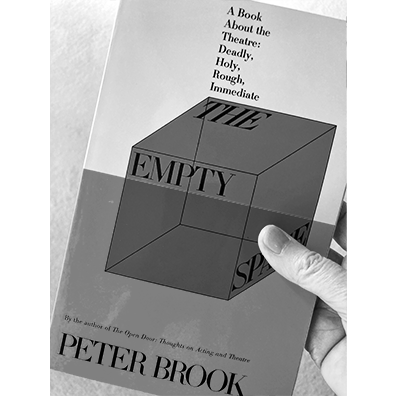
Peter Brook | The Empty Space | A book about the theatre | Books to read
2026
In The Empty Space, Peter Brook contrasts three theatrical approaches: Shakespeare exemplifies immediate, living theatre that connects deeply with audiences; Brecht uses distancing techniques to provoke critical thought rather than emotional immersion; and Beckett strips theatre to its essentials, revealing meaning through minimalism and silence. Brook argues that great theatre can emerge from an “empty space” when actors and audiences engage authentically.
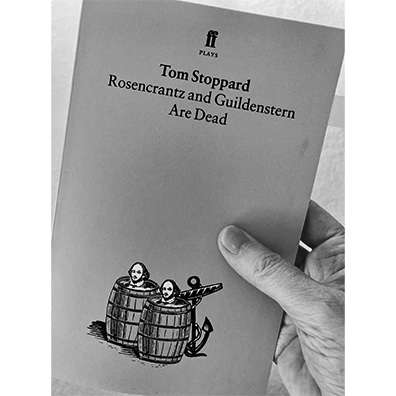
Tom Stoppard | Rosencrantz and Guildenstern Are Dead | A play | Books to read
2026
Tom Stoppard’s Rosencrantz and Guildenstern Are Dead uses the Theatre of the Absurd to portray a world governed by uncertainty, chance, and meaningless routines. Through its confused protagonists, circular dialogue, and lack of control, the play reflects societal hopelessness and the collapse of stable beliefs, suggesting that individuals struggle to find purpose or certainty in an indifferent, incomprehensible world. An homage to Shakespeare.
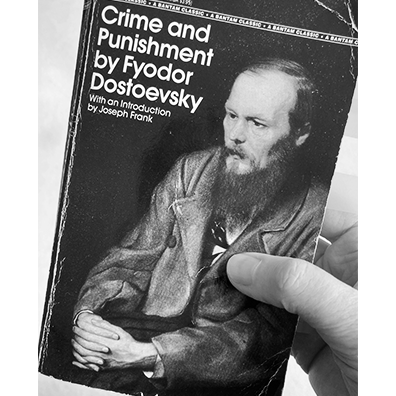
Fyodor Dostoevsky | Crime and Punishment | Books to read
2026
Crime and Punishment by Fyodor Dostoevsky follows Rodion Raskolnikov, a poor student in St. Petersburg who murders a pawnbroker, believing himself justified.
Overcome by guilt and paranoia, he deteriorates while avoiding suspicion. Encounters guide him toward confession. He admits his crime and is sent to Siberia, where suffering allows the possibility of moral redemption and spiritual renewal.
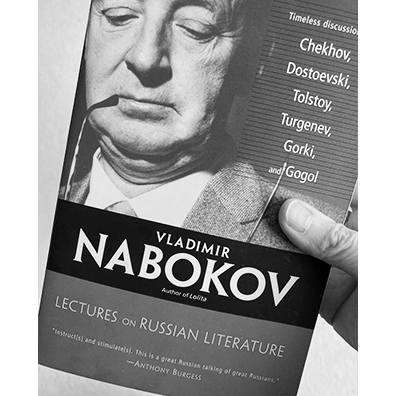
Vladimir Nabokov | Lectures in Russian Literature | Books to read
2026
In Lectures in Russian Literature, Vladimir Nabokov criticizes Fyodor Dostoevsky’s Crime and Punishment as melodramatic and philosophically crude. He finds Raskolnikov an unconvincing thinker and rejects the novel’s moral-religious framework as heavy-handed.
Prioritizing aesthetic precision, Nabokov argues Dostoevsky sacrifices artistic control for sensationalism, preferring Tolstoy and viewing Dostoevsky’s fame as driven more by emotional excess than genuine literary craftsmanship overall.
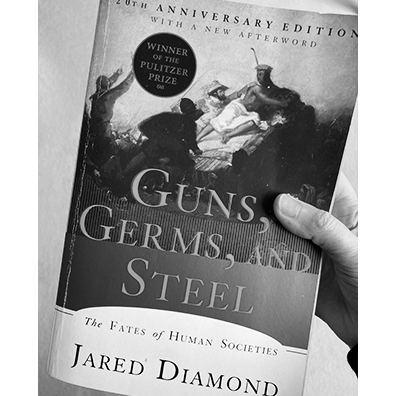
Jared Diamond | Guns, Germs and Steel | Books to read
2026
Guns, Germs, and Steel by Jared Diamond argues global inequality stems from geography, not racial superiority. Eurasia’s east–west axis, domesticable species, and dense populations fostered agriculture, technology, and disease resistance.
These advantages produced guns, germs, and steel, enabling conquest and domination. Thus, environmental factors, rather than innate human differences, shaped the uneven development of civilizations worldwide over time globally everywhere.
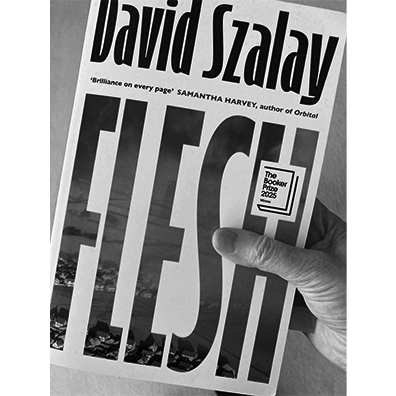
Flesh | David Szalay | 2025 Booker Prize | Books to read
2026
Flesh (2025) by David Szalay traces the life of István, a taciturn Hungarian man whose impulsive decisions carry him from troubled youth and poverty to unexpected wealth and social status in London. Despite outward success, he remains emotionally detached, shaped by trauma, instinct, and physical experience. Sparely written and episodic, the novel explores masculinity, alienation, class, and the limits of language in capturing inner life.
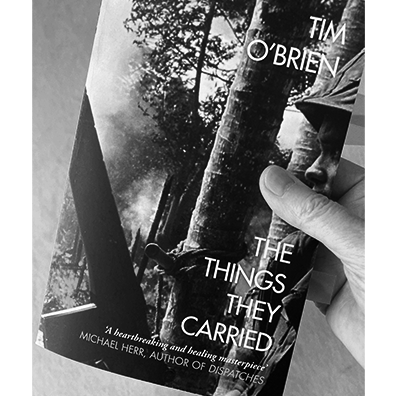
The things they carried | Tim O’Brien | Vietnam war literature | Books to read
2026
A collection of linked stories about American soldiers in the Vietnam War. It explores not only the physical items they carry—like weapons, letters, and photos—but also emotional burdens such as fear, guilt, love, and trauma. Blending fact and fiction, the book examines memory, storytelling, and the psychological impact of war, showing how soldiers struggle to make sense of their experiences both during and after combat.
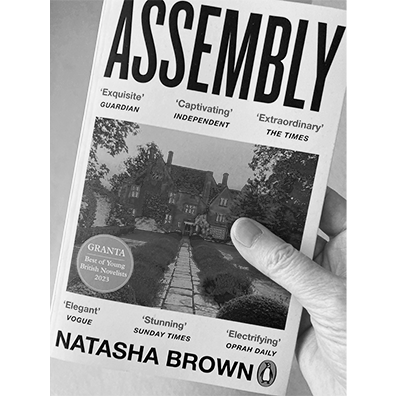
Assembly | Natasha Brown | New British fiction | Books to read
2026
Assembly by Natasha Brown is a short, sharp novel about a successful black British woman navigating corporate finance, wealth, race, and power in contemporary Britain. As she prepares to attend her boyfriend’s elite family gathering, she reflects on the personal costs of assimilation, ambition, and structural inequality. The book blends social critique with intimate self-examination, questioning success, belonging, and what it means to live within systems built to exclude you.
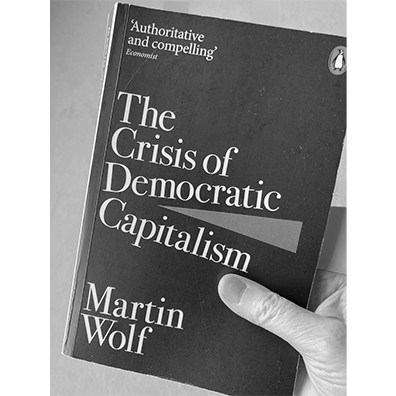
The crisis of democratic capitalism | Martin Wolf | Political science | Books to read
2026
Democracy under strain.
Wolf argues that democratic capitalism is in a systemic crisis, not because markets or democracy are inherently flawed, but because the balance between them has broken down.
Wolf is especially concerned with authoritarian populism, which he sees as a symptom rather than the root problem. When democratic capitalism fails to deliver security and fairness, voters turn to leaders who promise protection—even at the cost of liberal norms. Economic disfunction feeds cultural and political fracture (polarisation).


