
News: Design and business, art and technology, ideas and good stuff
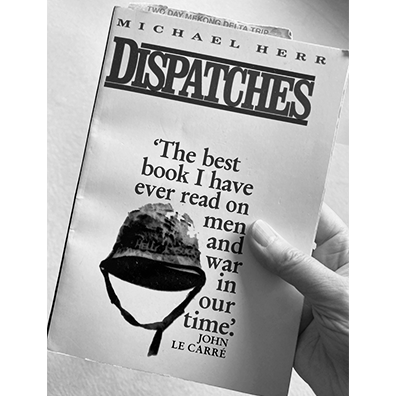
Dispatches | Michael Herr | Non-fiction | Books to read
2026
Everyone was scared, but no one talked about it.
Dispatches is a classic work of Vietnam War literature—part journalism, part memoir, part literary experiment. An early and outstanding example of the New Journalism, Herr’s rendering of his experiences as a Vietnam War correspondent are immersive and subjective. He writes in a fast, almost hallucinatory, stream-of-consciousness style. Not about military strategy but about the experience–masculinity, violence, brotherhood. Raw, personal and morally unsettled.
Herr later co-wrote Apocalypse Now.

The anxious generation | Jonathan Haidt | Psychology | Books to read
2026
The book argues that today’s surge in anxiety, depression, and social withdrawal among young people—especially Gen Z—is largely driven by how childhood changed in the 2010s. Its central thesis: childhood shifted from being play-based and independence-rich to phone-based and safety-obsessed, and that shift rewired kids’ social, emotional, and cognitive development—particularly during adolescence.
Haidt points to two big changes: the phone-based childhood and the decline of free play. He emphasises that puberty + social media are dangerous combinations (isolation, comparison). He argues that there is a developmental mismatch: kids were overprotected in the real world but underprotected online.

Why we’re polarised | Ezra Klein | Political science | Books to read
2026
Published in 2020, the book analyses the deepening political polarisation in the United States. Core ideas: identity as the root of polarisation, historical realignment (Civil Rights Act of 1964), structural loops (political institutions, media, psychology, social sorting), and polarised politics ‘by design’.
Klein suggests that almost all political conflict today is identity-driven rather than rooted in restrained policy disagreement. His book helps explain why political debates feel less about policy and more about who we are.
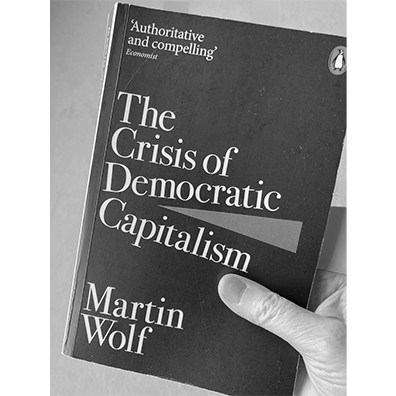
The crisis of democratic capitalism | Martin Wolf | Political science | Books to read
2026
Democracy under strain.
Wolf argues that democratic capitalism is in a systemic crisis, not because markets or democracy are inherently flawed, but because the balance between them has broken down. Economic outcomes have increasingly undermined democratic legitimacy, while politics has failed to correct market excesses.
Wolf is especially concerned with authoritarian populism, which he sees as a symptom rather than the root problem. When democratic capitalism fails to deliver security and fairness, voters turn to leaders who promise protection—even at the cost of liberal norms. Economic disfunction feeds cultural and political fracture (polarisation).


